




Lesson 2: NIce to meet you. - Structure 2 -
Structure 2: Verb conjugation and classifying
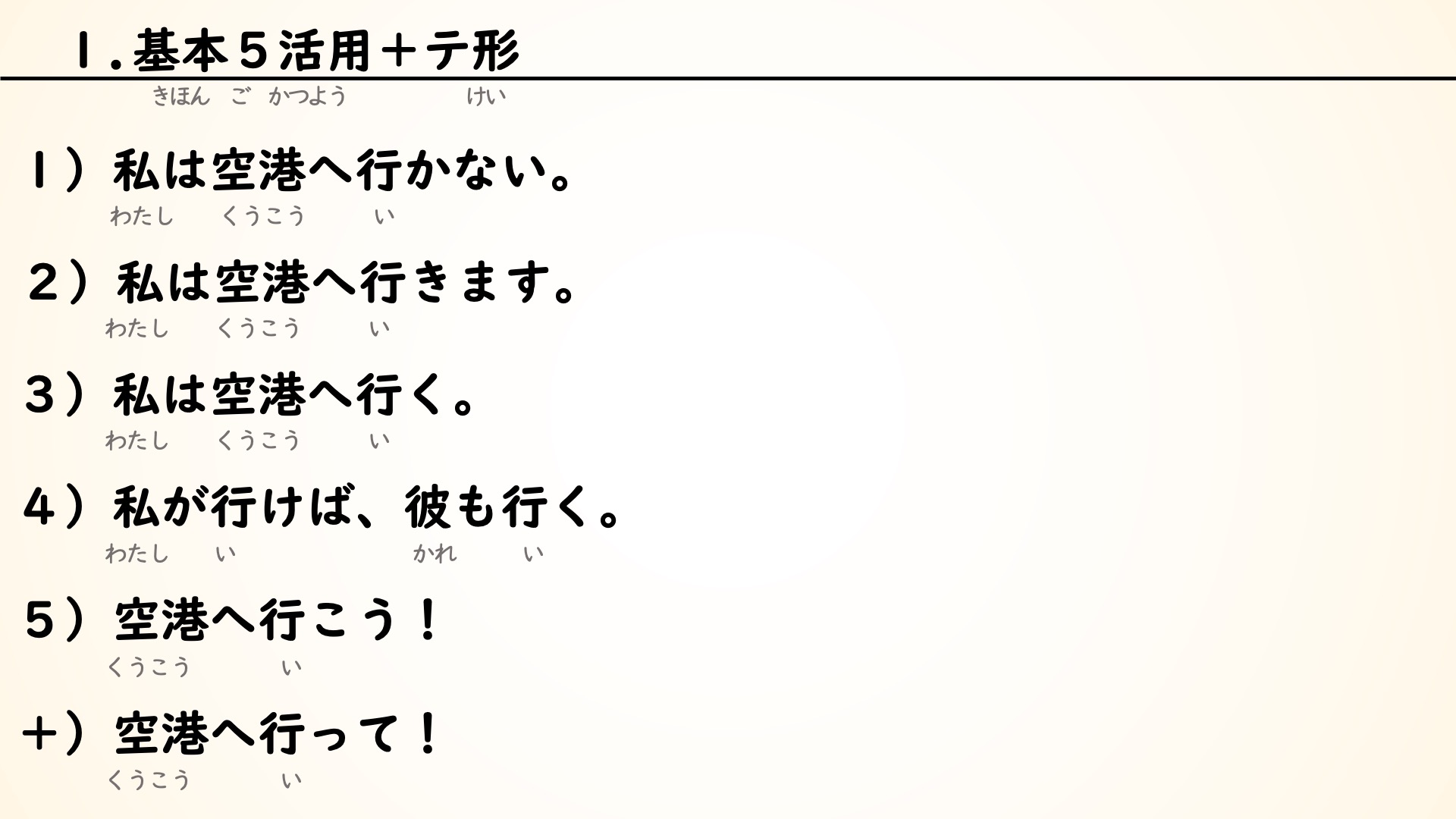
1. Five basic verb conjugations and the TE-form:
First, let’s get a rough idea of the overall structure of Japanese verb conjugation.
- Negative form (NAI-form)
- Polite form (MASU-form)
- Dictionary form
- Conditional form (BA-form)
- Volitional form
+) TE-form
Names such as “( –form )” refer to the name of the verb’s conjugated form.
The basic conjugations are 1) through 5) above,
but the TE-form should also be learned at an early stage.
In addition to 1) through 5) and the te-form, there are other forms such as
the potential, imperative, passive, and causative forms.
However, at the introductory level, learners should focus on
mastering 1)–5) plus the TE-form ( We will explain the te-form in Lesson 3. )
2. Classifying verbs by conjugation patterns
Let’s understand consonant verbs, vowel verbs, and irregular verbs!
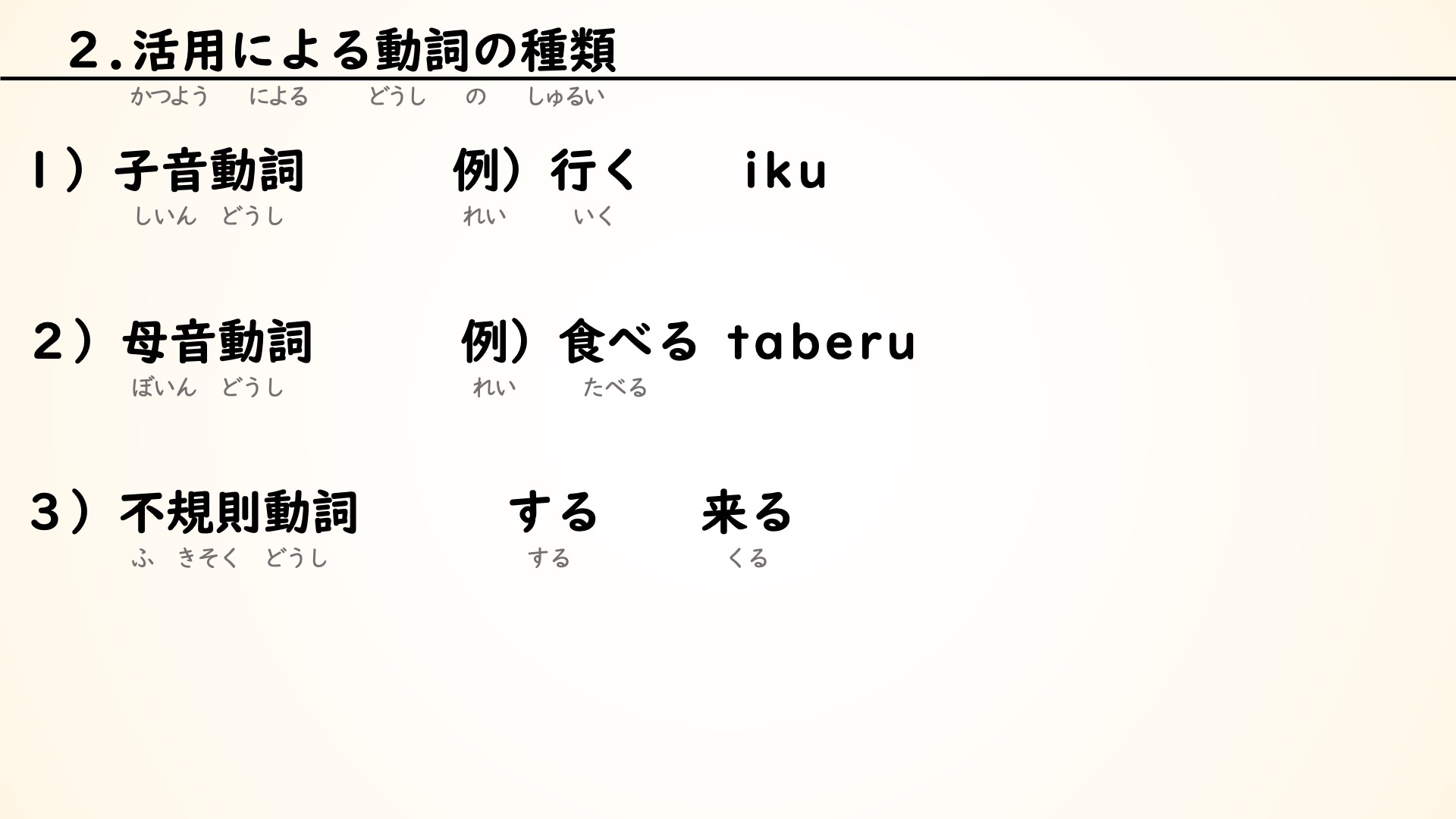
Japanese verbs can be divided into three types based on their conjugation patterns:
- Consonant verbs ( CV )
- Vowel verbs ( VV )
- Irregular verbs ( IV )
1) Consonant verbs ( CV )
Consonant verbs are verbs whose verb stem ends with a consonant when written in romaji.
Example: 行く(go)
行く iku = stem ik + conjugated ending u
2) Vowel verbs ( VV )
Vowel verbs are verbs whose verb stem ends with a vowel when written in romaji.
Example: 食べる(eat)
食べる taberu = stem tabe + conjugated ending ru
3) Irregular verbs ( IV )
Irregular verbs are verbs whose conjugation patterns are irregular.
There are only two such verbs:
する (do) and 来る (come).
3. Rules of conjugation patterns
Let’s get a clear picture of each verb’s conjugation pattern.
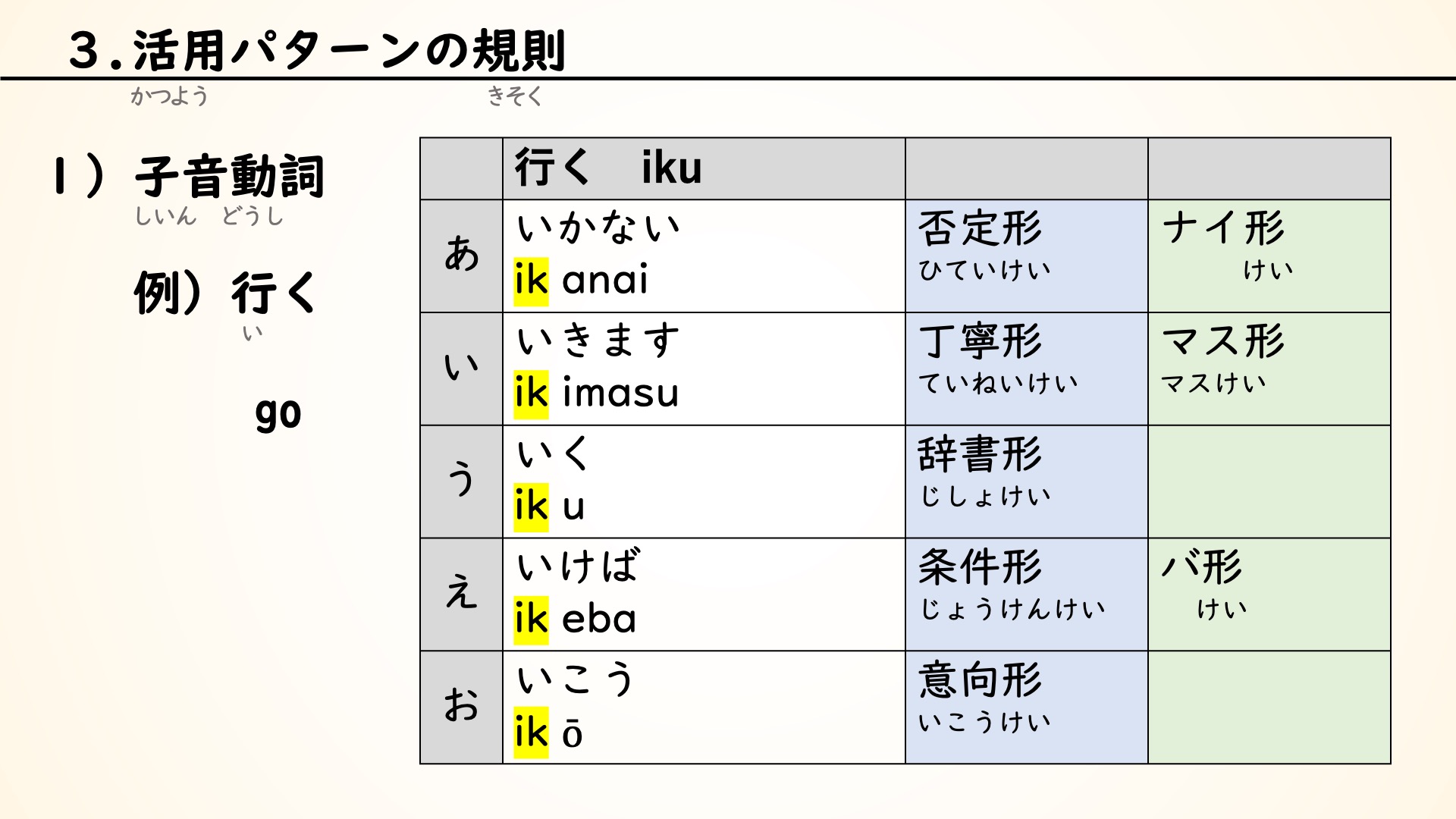
1) Examples of conjugation patterns for Consonant verbs
The colored part shows the sound that changes in each conjugation.
|
聞く listen kiku |
話す talk hanasu |
待つ wait matsu |
・・・ |
読む read yomu |
言う say iu |
|
|---|---|---|---|---|---|---|
| あ |
きかない kikanai |
はなさない hanasanai |
またない matanai |
・・・ |
よまない yomanai |
いわない iwanai |
| い |
ききます kikimasu |
はなします hanashimasu |
まちます machimasu |
・・・ |
よみます yomimasu |
いいます iimasu |
| う |
きく kiku |
はなす hanasu |
まつ matsu |
・・・ |
よむ yomu |
いう iu |
| え |
きけば kikeba |
はなせば hanaseba |
まてば mateba |
・・・ |
よめば yomeba |
いえば ieba |
| お |
きこう kikou |
はなそう hanasou |
まとう matou |
・・・ |
よもう yomou |
いおう iou |
2) Examples of conjugation patterns for Vowel verbs
Vowel verbs can be divided into two types: e-verbs and i-verbs.
In both types, the verb stem stays the same, and only the ending changes during conjugation.
|
食べる eat taberu |
寝る lie neru |
起きる get up okiru |
見る look miru |
|
|---|---|---|---|---|
|
たべない tabenai |
ねない nenai |
おきない okinai |
みない minai |
|
|
たべます tabemasu |
ねます nemasu |
おきます okimasu |
みます mimasu |
|
|
たべる taberu |
ねる neru |
おきる okiru |
みる miru |
|
|
たべれば tabereba |
ねれば nereba |
おきれば okireba |
みれば mireba |
|
|
たべよう tabeyou |
ねよう neyou |
おきよう okiyou |
みよう miyou |
3) Examples: How irregular verbs conjugate
Japanese has only two irregular verbs: suru (“do”) and kuru (“come”).
Unlike consonant and vowel verbs, their conjugation does not follow the regular patterns.
Pay attention to the highlighted part in each form.
|
する do suru |
来る come kuru |
|---|---|
|
しない shinai |
こない konai |
|
します shimasu |
きます kimasu |
|
する suru |
くる kuru |
|
すれば sureba |
くれば kureba |
|
しよう shiyou |
こよう koyou |