




Lesson 2:NIce to meet you. - Speak 2 -
Speak 2 : Switching speech styles
Casual speech style
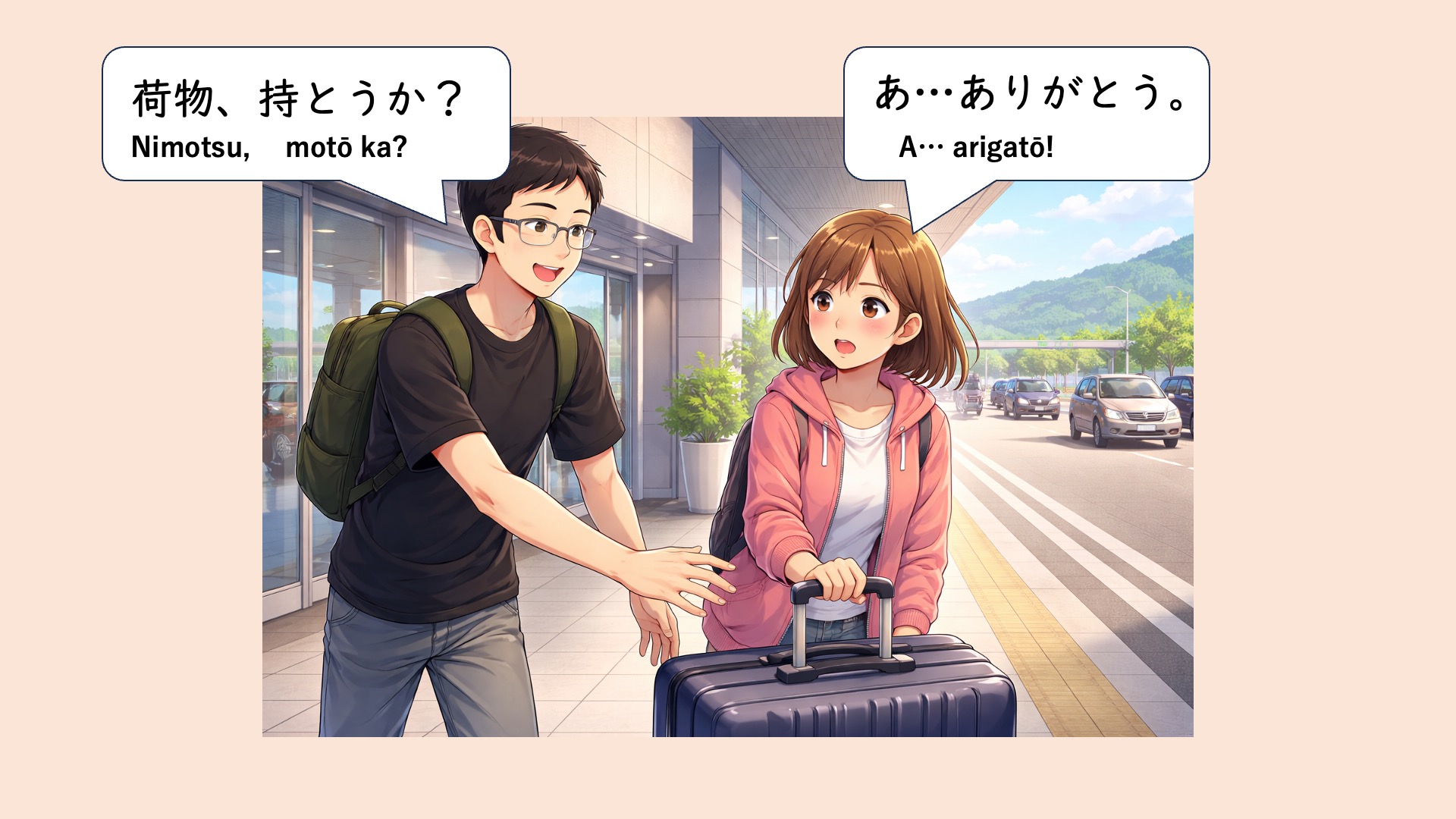
O: 荷物、持とうか?
Want me to carry your luggage? (1)
M: あ、ありがとう!
Oh, thanks!
O: 私、ミーナ。えーっと…。
I’m Mina. Um… (2)
M: あ、僕は、オウ・リュウ。「リュウ」でいいよ。よろしくね。
Oh, I’m O, Ryu. You can just call me “Ryu.” Nice to meet you.
O: 「リュウさん」ね。リュウさんは、学生?
“Ryu-san,” right? Are you a student, Ryu?
M: うん、学生だよ。
Yeah, I am.
O: 日本語、上手ね。
Your Japanese is good. (1)
M: でも、まだまだだよ。
No, I still have a long way to go.
Notice!
Note 1:
「荷物、持とうか?」 is a shortened form of 「荷物を持とうか?」.
In casual conversation, particles like 「を」 are often omitted.
The sentence「日本語、上手ね」 follows the same pattern; it is a shortened form of 「日本語が上手ね」 in which the particle 「が」 is omitted.”
Note 2:
By introducing herself and then stopping without finishing the sentence, the speaker naturally encourages the other person to introduce themselves.
Formal speech style
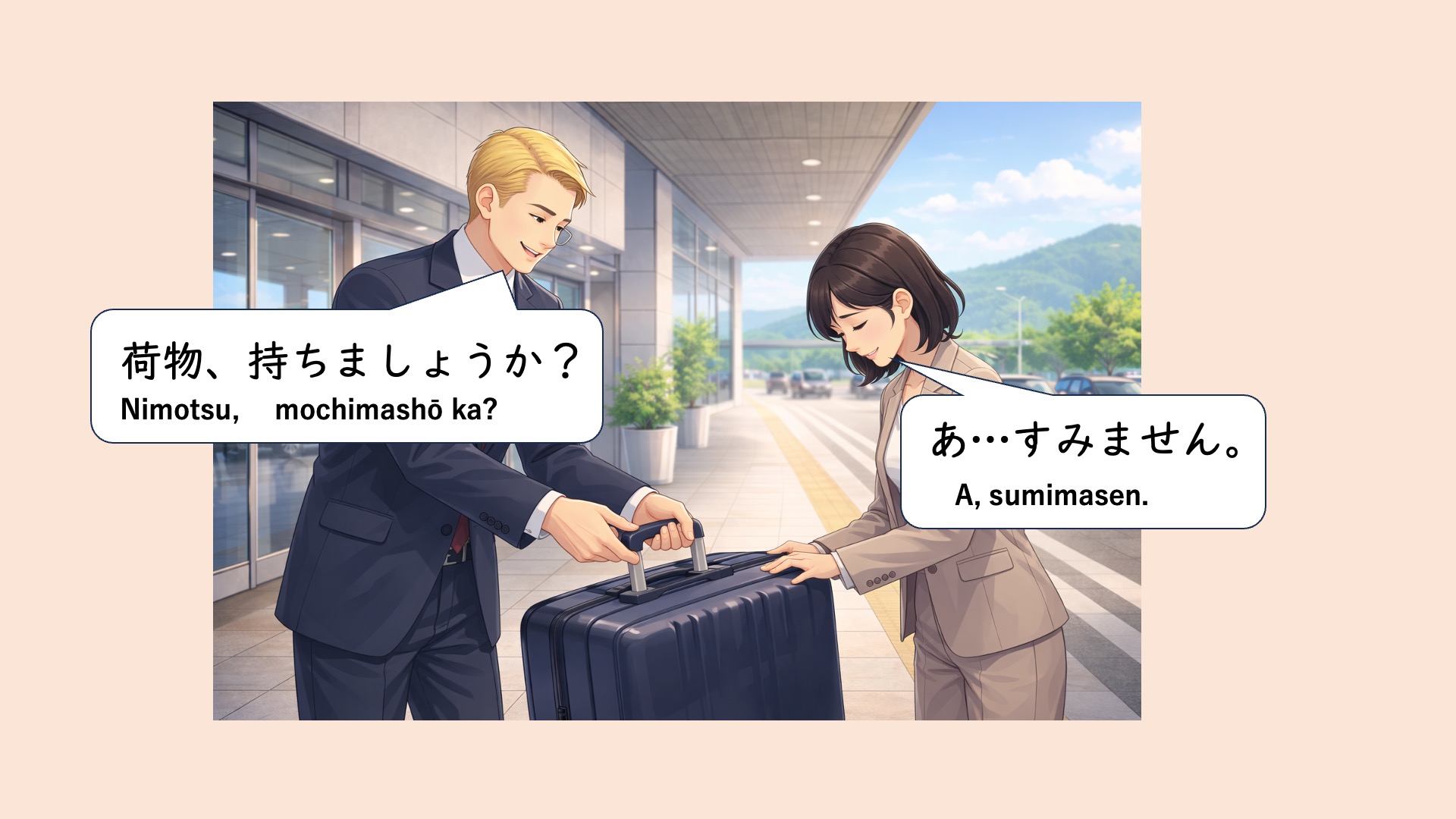
T: 荷物、持ちましょうか?
Shall I carry your luggage? (1)
L: あ、すみません。
Oh, thank you. (2)
T: 私、トーマスと申します。あの…失礼ですが…。
My name is Thomas. Um… excuse me, but… (3)
L: あ、すみません。私、「リン・チーリン」と言います。
「リン」と呼んでください。よろしくお願いします。
Oh, excuse me. My name is Lin Chi-lin.
Please call me “Lin.” Nice to meet you.
T: 「リンさん」ですね。よろしくお願いします。
リンさんは、日本語の先生ですか?
“Lin-san,” right? Nice to meet you.
Are you a Japanese teacher?
L: はい、日本語教師です。
Yes, I’m a Japanese-language teacher. (4)
T: そうですか。すごいですね!
I see. That’s impressive! (5)
L: ありがとうございます。ですが、まだまだですよ。
Thank you, but I still have a lot to learn.
Notice!
Note 1:
「荷物、持ちましょうか?」 is a shortened form of 「荷物を持ちましょうか?」.
As in casual speech, particles are often omitted even in polite conversation.
Note 2:
Here, 「すみません」 is used with the meaning of “thank you.”
In formal speech, gratitude is commonly expressed with 「すみません」 or 「ありがとうございます」.
Note 3:
By introducing herself and then stopping without finishing the sentence, the speaker naturally encourages the other person to introduce themselves.
Note 4:
When talking about your own profession, you should say 「教師です」 rather than 「先生です」.
Note 5:
Saying 「上手ですね」 (“You’re good”) to the professionals can sound rude.
Instead, it’s better to use another expression or simply say 「そうですか」