


Lesson 1: Welcome to Japan! - Scene 1 -
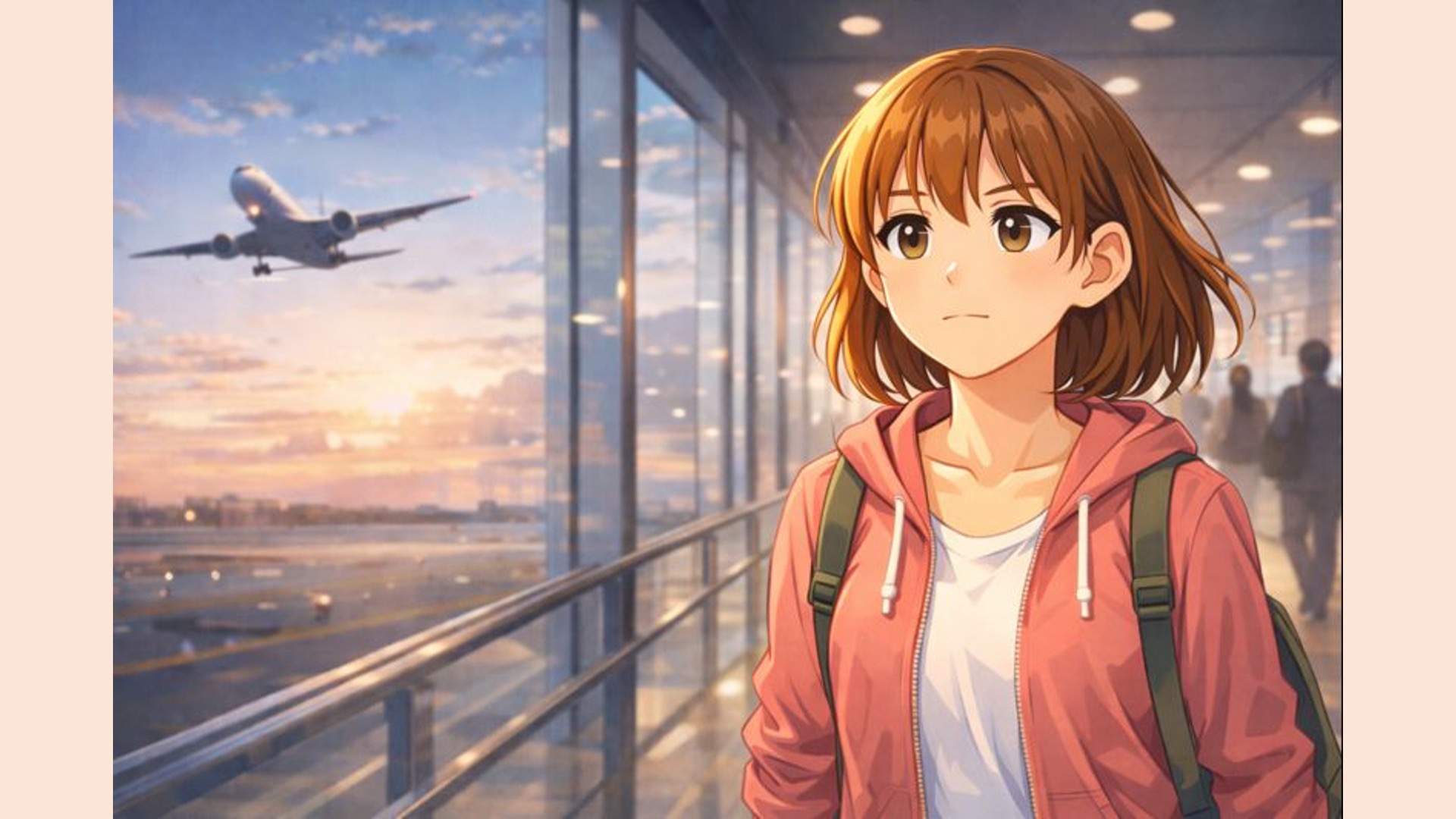
Scene 1 : Mina meets Ms. Honda at the airport.
第1課 日本へようこそ!
場面 1:空港でミーナが本田先生と会う。
本田 :ミーナさんですか?
ミーナ:はい、そうです。
本田 :「語楽LABO」の本田です。日本へようこそ!
ミーナ:はじめまして。ミーナです。よろしくお願いします、本田先生。
本田 :こちらこそ。よろしくお願いします。
: じゃ、行きましょう!あ…ミーナさん、トイレは大丈夫ですか?
ミーナ:はい!行きましたので、大丈夫です。
本田 :はい、それじゃ、こっちです。
ミーナ:(うわあ…この先生、すごくかわいいなあ。)
Dai ikka : Nihon e yōkoso!
Bamen ichi : Kūkō de Mīna ga Honda-sensei ni au.
Honda: Mīna-san desu ka?
Mina: Hai, sō desu.
Honda: “Gogaku LABO” no Honda desu. Nihon e yōkoso!
Mina: Hajimemashite. Mīna desu. Yoroshiku onegai shimasu, Honda-sensei.
Honda: Kochira koso. Yoroshiku onegai shimasu.
Ja, ikimashō! Aa… Mīna-san, toire wa daijōbu desu ka?
Mina: Hai! Ikimashita node, daijōbu desu.
Honda: Hai, sore ja, kocchi desu.
Mina: (Uwaa… kono sensei, sugoku kawaii nā.)
Lesson 1: Welcome to Japan!
Scene 1: Mina Meets Ms. Honda at the Airport
Honda: Are you Mina?
Mina: Yes, that’s me.
Honda: I’m Honda from Gogaku LABO. Welcome to Japan!
Mina: Nice to meet you. My name is Mina. It’s a pleasure to meet you, Ms. Honda.
Honda: Nice to meet you, too.
Alright, let’s go! Oh… Mina, are you okay? Do you need to use the restroom?
Mina: Yes! I already went, so I’m fine.
Honda: Okay, then this way.
Mina (thinking): Wow… this teacher is really cute…
日本、にほん、Nihon:Japan. The name of the country.
空港、くうこう、Kūkō:Airport. A place where planes arrive and leave.
ミーナ、みいな、Mīna:Mina. A person’s name (the main character).
本田、ほんだ、Honda:Honda. A family name (teacher’s name).
先生、せんせい、Sensei:Teacher. Used for teachers and instructors.
語楽LABO、ごがくらぼ、Gogaku Labo:Gogaku Labo. The name of a school/service.
トイレ、といれ、Toire:Toilet / restroom.
こっち、Kocchi:This way / over here. Used to guide someone.
出会う、であう、Deau:To meet someone, often for the first time or by chance.
お願いする、おねがいする、Onegai suru:To ask for something politely or to make a request.
行く、いく、Iku:To go to a place.
大丈夫な、だいじょうぶな、Daijōbu na:okay, all right, or fine, used to describe a noun.
かわいい、Kawaii:cute or adorable, often used to describe people, animals, or things.
よろしく、Yoroshiku:A set phrase used when greeting, asking for cooperation, or starting a relationship.
すごく、Sugoku:very or extremely, used to emphasize adjectives or feelings.
~で、de:It marks the place where an action happen.
~が、ga:It marks the subject.
~と、to:It means “and”.
~か?、ka:A question particle
~の、no:A particle showing possession, relation, or connection between nouns.
~へ、e:It means “to” or “toward”: pronounced “e,” not “he.”
~は、wa:It marks what the sentence is about; pronounced “wa,” not “ha.”
~ので、node:It means“because” or “so,” used to give a reason.
~なあ…、nā:It shows feelings such as admiration, reflection, or mild emotion.
________________________________________________
Other Words and Expressions
じゃ、,ja:A casual expression meaning “well then” or “okay,” used when moving on or ending a conversation.
~さん、,san:A polite honorific added to names, similar to “Mr.” or “Ms.”.
~です、desu:A polite sentence-ending word that states or explains something.
あ…、a…:An interjection showing hesitation, realization, or a small reaction.
うわあ、uwaa:An emotional expression showing surprise, admiration, or strong feeling.
ようこそ、yōkoso:A welcoming expression meaning “welcome.”
はじめまして、Hajimemashite:A set phrase used when meeting someone for the first time.
よろしくお願いします、よろしくおねがいします,Yoroshiku onegai shimasu:A very common expression meaning “nice to meet you,” “please be kind to me,” or “I look forward to working with you,” depending on context.
こちらこそ、Kochira koso:A polite response meaning “likewise” or “the pleasure is mine.”