







Lesson 1: Welcome to Japan! - Speak 1 -
Speak 1: Greetings and Manners
Let’s learn greetings and expressions for first-time meetings!:
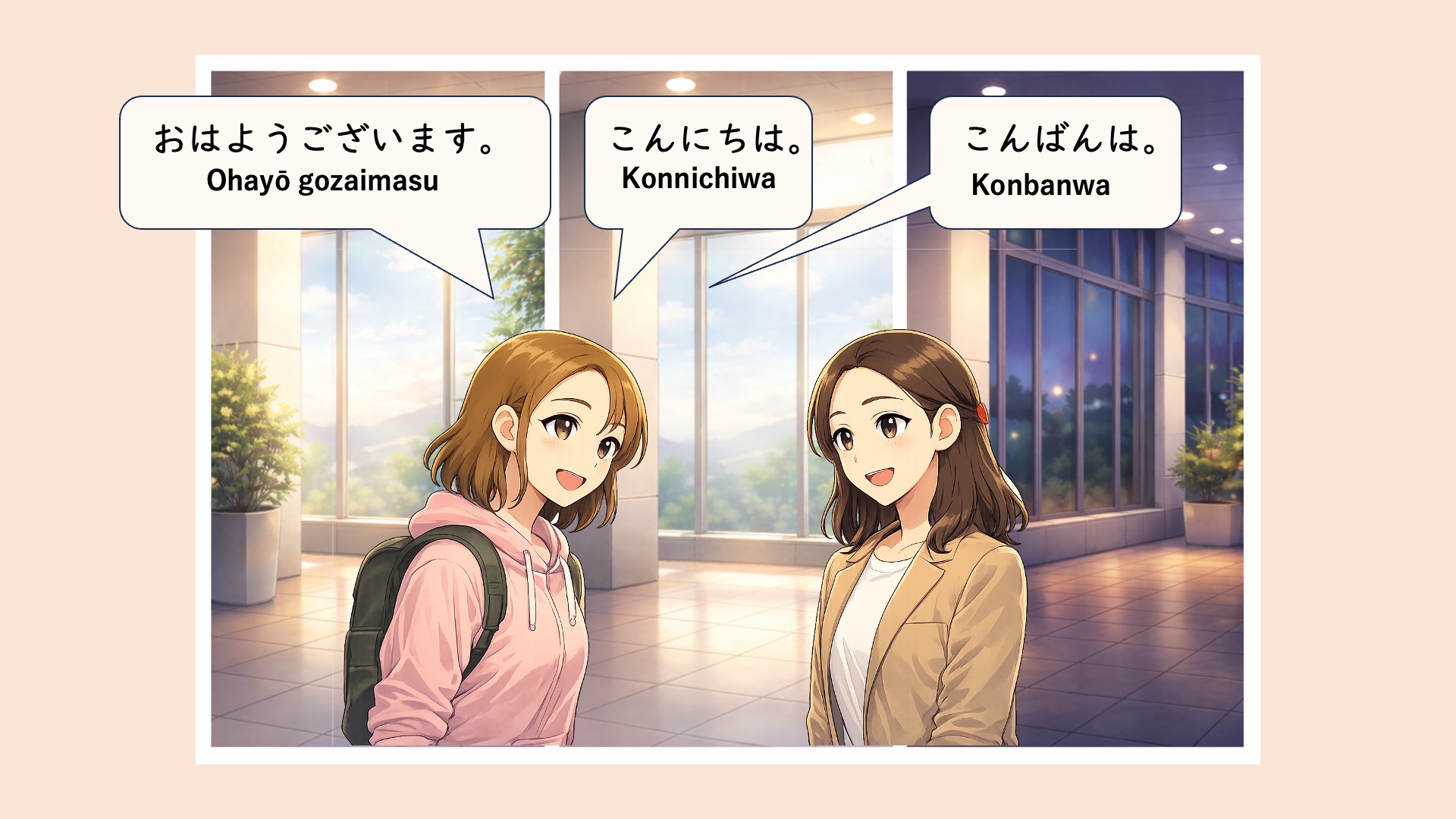
・おはよう。(Casual)
・おはようございます。(Polite)
Good Morning! (from early morning to about 10a.m.)
・こんにちは。
Good afternoon! (from a.m.11 to sunset)
・こんばんは。
Good evening! (from sunset to midnight)
・おやすみなさい。
Good sleep!
In English, one expression is often enough. In Japanese, we use different expressions for different levels of politeness.
・はじめまして。ミーナと申します。どうぞよろしくお願いします。
Polite (Honorific) :Nice to meet you. My name is Mina. I look forward to being with you.
・はじめまして。ミーナです。よろしくお願いします。
Polite :Nice to meet you. I’m Mina. I look forward to being with you.
・はじめまして。私はミーナ。よろしくね。
Casual :Nice to meet you. I’m Mina. I look forward to being with you.
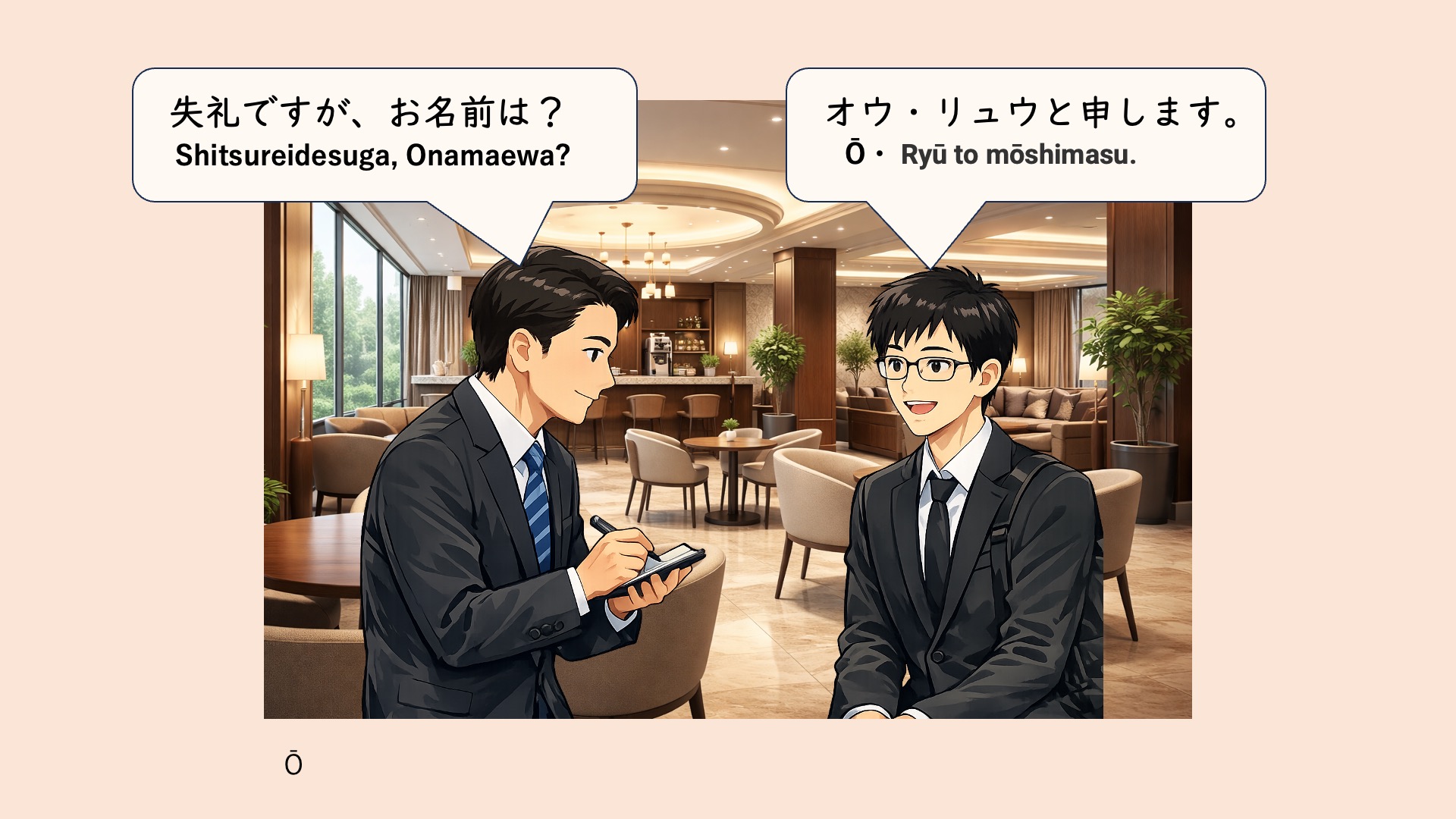
Polite (honorific)
A:失礼ですが、お名前は?
Excuse me, may I ask your name?
B:オウ・リュウと申します。
My name is Ou Ryu.
Polite
A:あのう、すみません、お名前は?
Sorry, what’s your name?
B:オウ・リュウと言います。
I’m Ou Ryu.
Casual
A:あのう…、名前は?
Um… your name?
B:リュウです。
I’m Ryu.
A:リュウさんは 先生ですか?
Are you a teacher, Ryu?
B:いいえ、ちがいます。
No, I’m not.
A:学生ですか?
Are you a student?
B:はい、そうです。
Yes, I am.
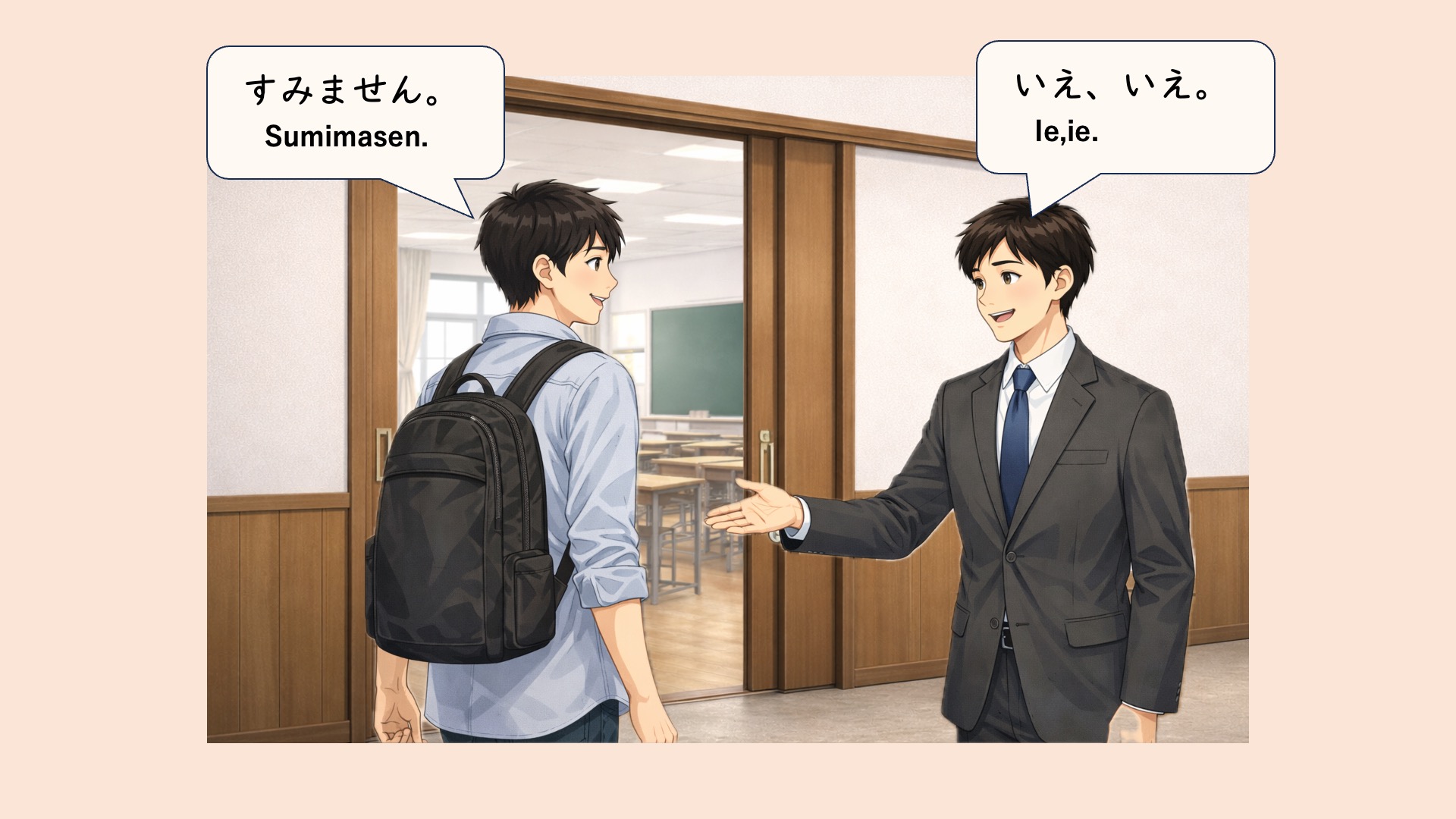
A: すみません。
Excuse me. / I’m sorry.
B: いえ、いえ。
No problem.
A: どうもすみません。
I’m very sorry.
B: いえ、大丈夫ですよ。
No, it’s okay.
A:どうぞ。
Here you are.
B:ありがとう。
Thank you.
A:どうぞ。
Please.
B:すみません。
Thank you.
A:いえ、いえ。
No problem.
A:どうぞ。
Please.
B:ありがとうございます。
Thank you very much.
B:どういたしまして。
You're welcome.
Notice!
About 「ありがとう」and「すみません」:
In English, people usually say “thank you.”
In Japanese, “sumimasen” is originally an apology and means “sorry.”
However, people often use “sumimasen” instead of “thank you.”
This is because “sumimasen” shows not only thanks, but also the feeling of
“I’m sorry to trouble you” or “I’m sorry to make you do this.”
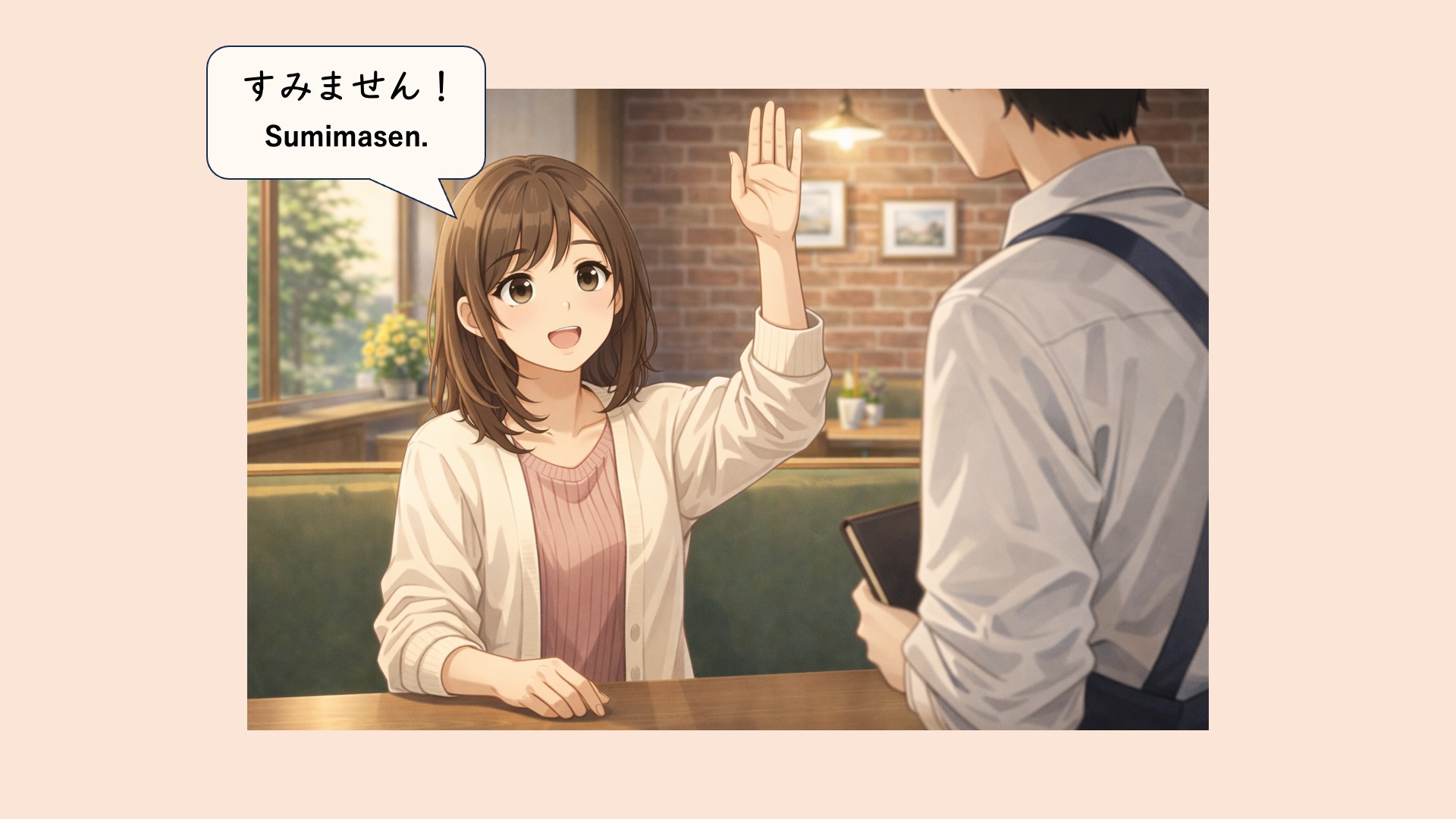
A:すみません
Excuse me!
A: 失礼します。
May I come in?
B: はい、どうぞ。
Yes, please.
A: それでは、失礼します。
Well then, excuse me.
B: はい、おつかれさま。
Thank you for your work. / Good job today.
A: それじゃ、また。
See you. / See you later.
B: はい、失礼します。
Goodbye.
A: じゃ、またね。
Then, see you!
B: うん、じゃあね。
Okay, bye!
Notice!
「さようなら」“Sayōnara” is usually used when people think they may not meet again, or when the goodbye feels final.
However, in Japan, it is also commonly used as a standard farewell between teachers and students, especially in elementary and junior high schools, even though they will meet again.